
Mapping Chicago’s Food Waste System to Align a Siloed Industry
Finding and Connecting the Invisible Links for Collaboration
Jan - May ‘23 (14 weeks)
Stakeholders across Chicago’s food industry have been working to reduce city-wide food waste. But with different industry experts deep in their own focal areas, and such a complex challenge, our SMEs needed a shared language to identify the right opportunities for collaboration.
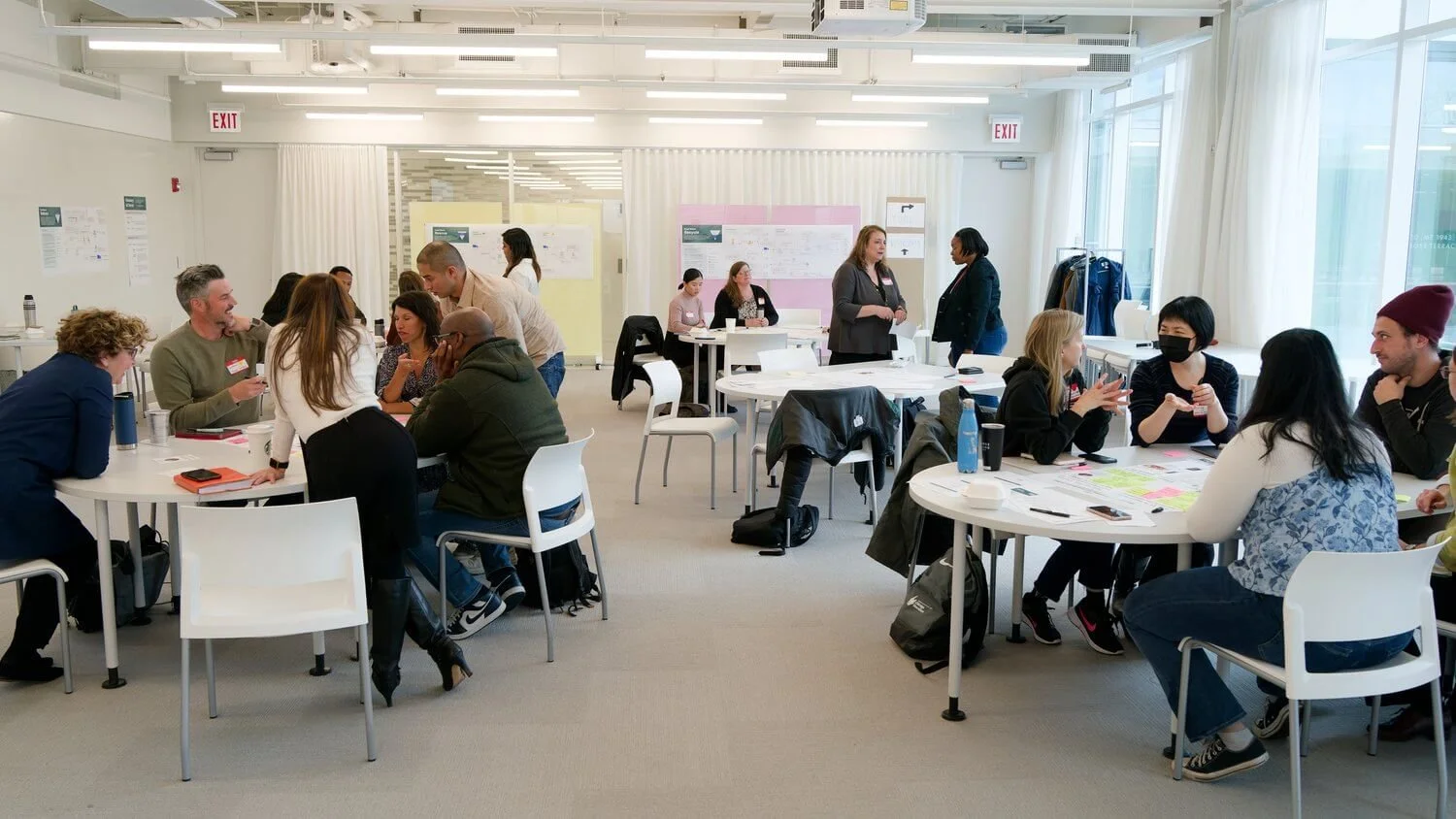
Our Chicago Food Matters SME Workshop (May 2023)
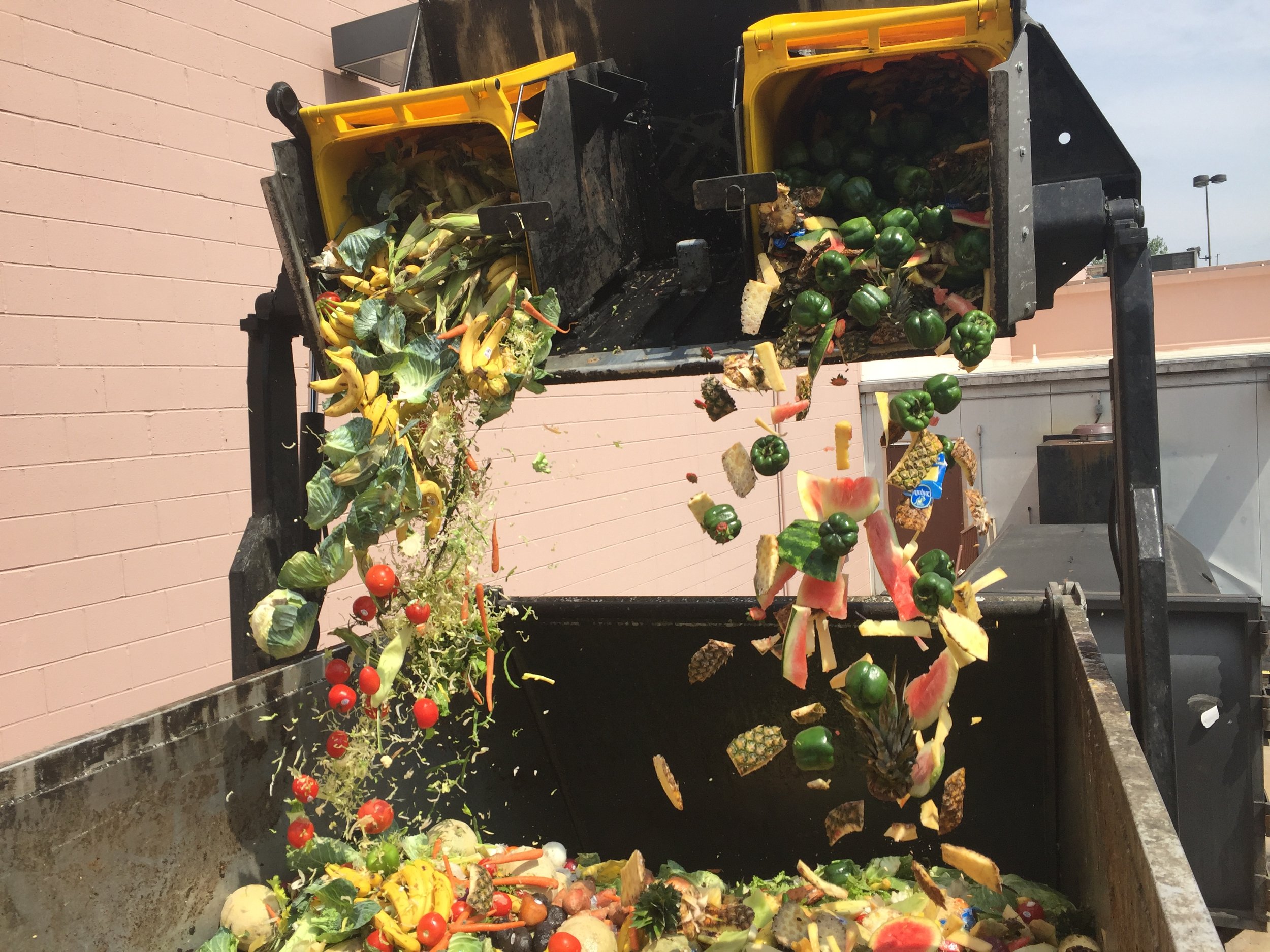
Every year the US wastes
133 billion lbs. of food.
That’s equal to the annual emissions of 42 coal-fired plants.
Image Source: Illinois Food Scrap & Composting Coalition
Source: USDA - Food Waste its Links to Greenhouse Gases and Climate Change
The ChallengeUnderstanding the systemStakeholders across Chicago’s food industry have been working to find the right opportunities in food reduce, rescue and recycle workflows, but struggled to prioritize what to do.
The ArtifactsOur stakeholders span diverse sectors, are SMEs in their spaces, and are passionate about food waste. But they’re disconnected from each other’s workflows, had knowledge gaps between each other, and so couldn’t picture what success would look like.
Facilitated discussions and interviews with our stakeholders
During our interviews with food service stakeholders, we started to use post-its and sketches to illustrate their area of the food system. This wasn’t just a way to capture what they said, but also a way to clarify and refine our understanding in real time.
After consolidating with other stakeholder interviews, our class developed three key workflow diagrams for food reduce, reuse and recycle across the entire system.
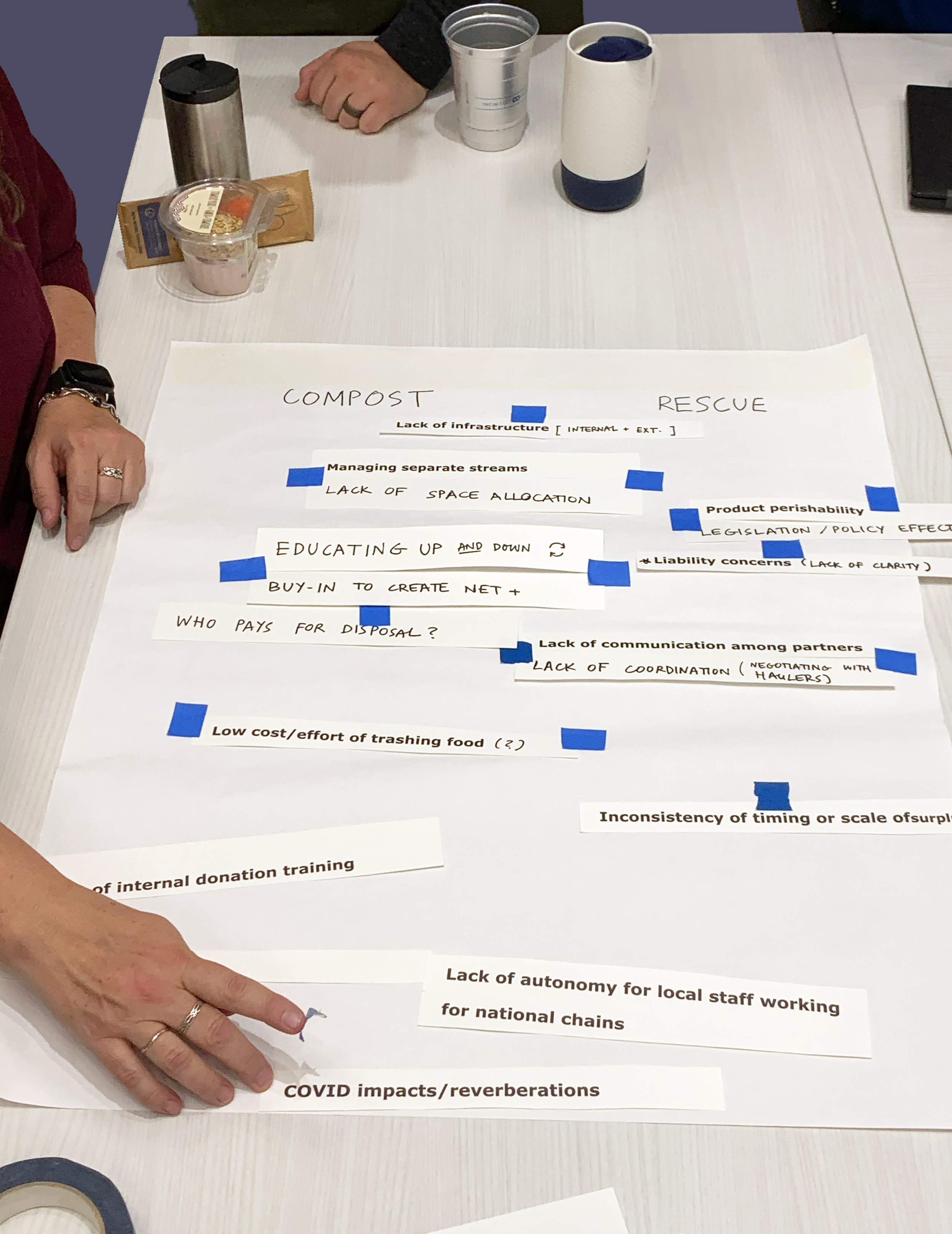
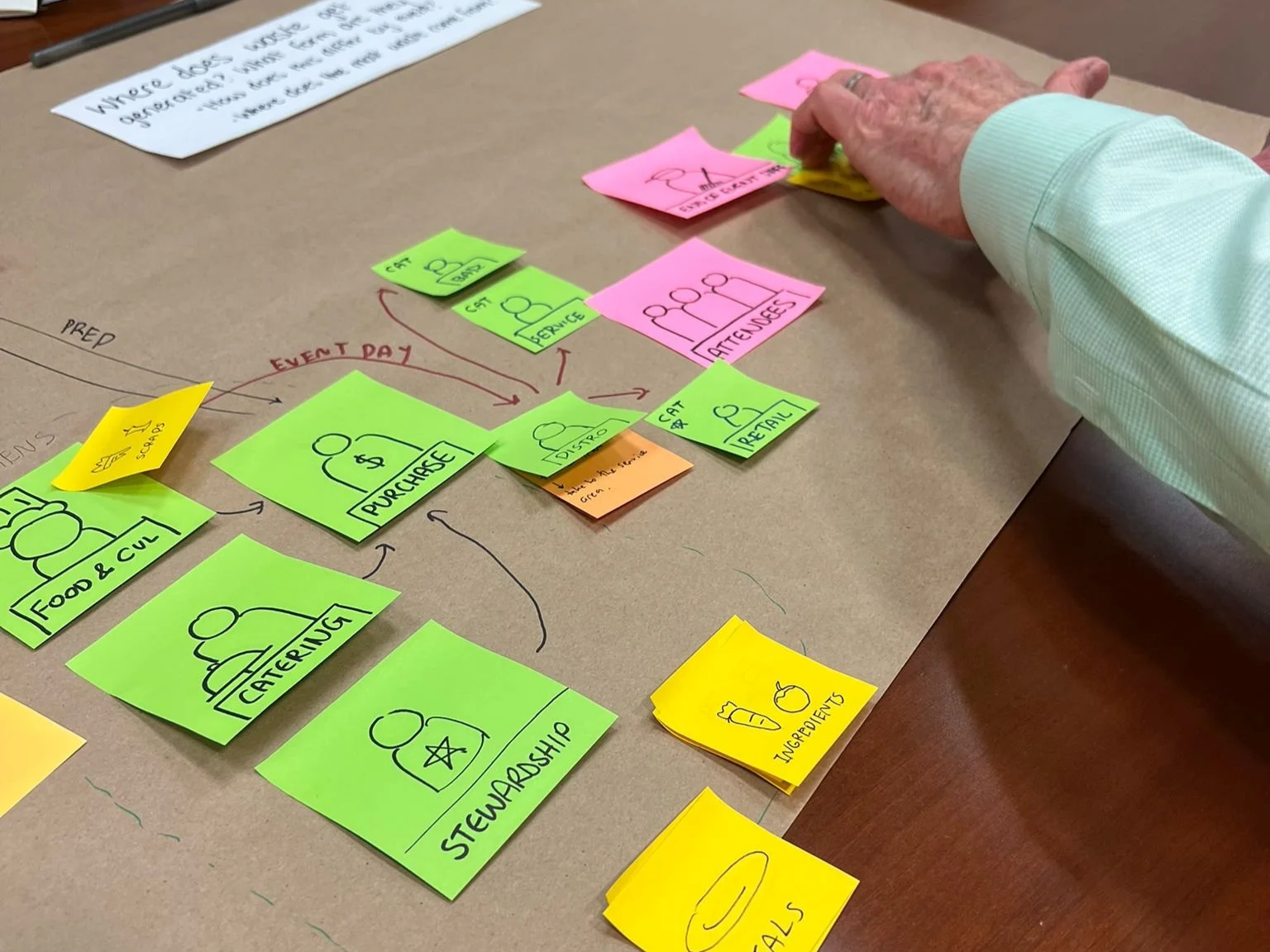


The ImpactSo What?With a shared diagram of the entire system, showing interconnections between our SME spaces, our stakeholders could finally start to see where their opportunities overlapped and supported each other. Working towards a better food future was no longer in siloed discussions, but in a shared vision with actionable next steps.

Presenting one of our artifacts at the Food Matters Workshop