
Prototyping Agriculture Systems to Make Abstract Opportunities Feel Real
Making a Climate Future Feel Tangible & Investable Today
Jan - May ‘23 (14 weeks)
How do you make an intangible future impact like climate change feel like a practical, concrete investment opportunity for today? We explored how the process of prototyping and iteration can strengthen our ideas at a rapid pace, and how it can make a systemic challenge feel actionable.
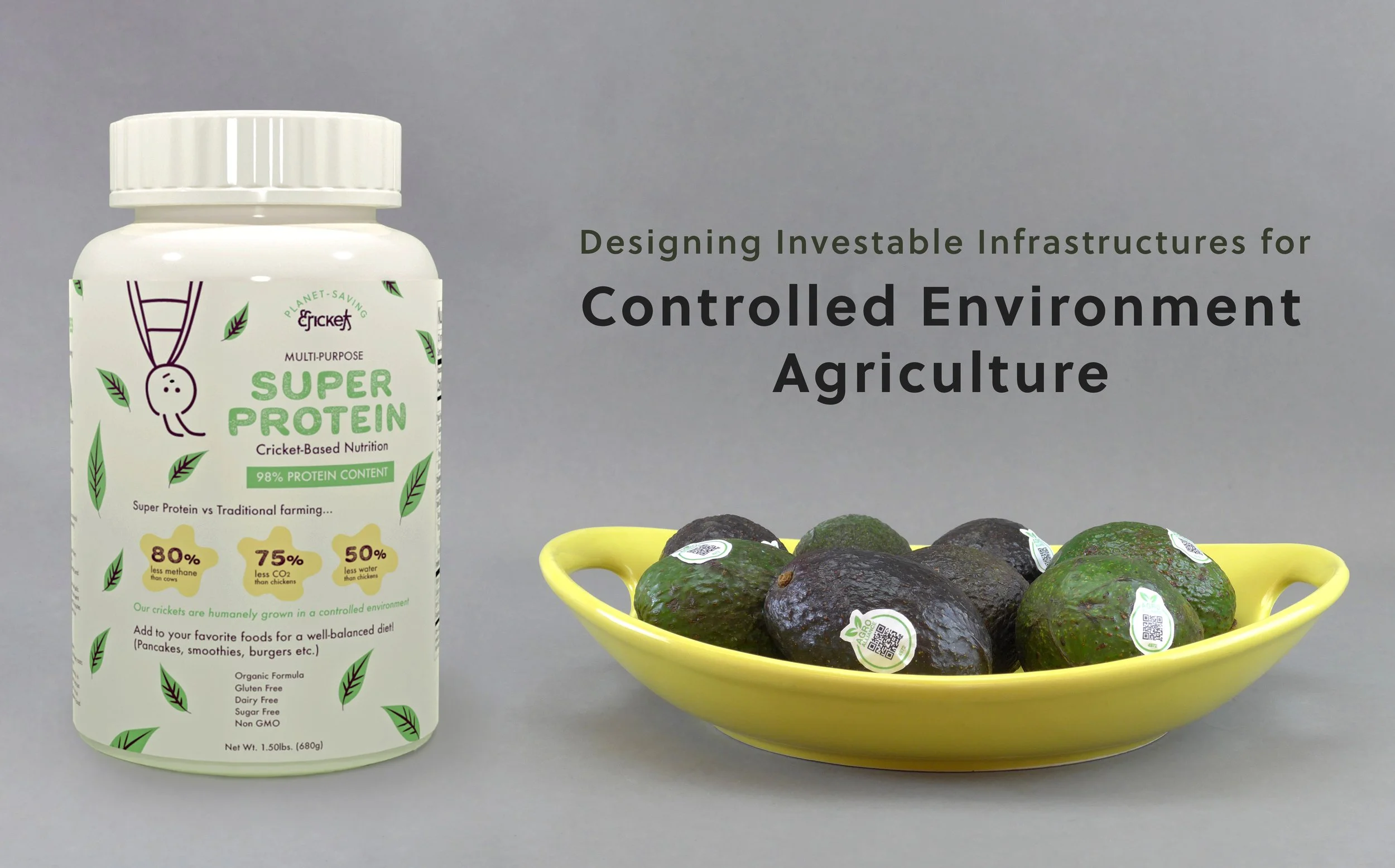
Prototype Artifacts
The challengeUnderstanding the systemThe ArtifactsThe technologies for controlled environment agricultures (CEA) could make a great impact on the future of food justice in a turbulent climate future. How do we build a case that it’s worth investing into?
When thinking about climate resiliency or food equity and justice, the opportunity tends to be described with future projection numbers, future market sizes and hopeful optimism. While all valid, this is often not enough to make real decisions today. It’s too easy to say now and do later.
To understand the opportunity, we continuously built, critiqued and reiterated different CEA systems alongside crunching our numbers. This helped us better see, feel and think about the opportunity we were asking for people to buy into. It helped strengthen our pitches for the final showcase.


Using rapid prototyping to drive our research and iteration process
We showcased two prototyped CEA opportunities. One being a pitch for the insect protein industry paired with marketing materials and early adopter sectors. The other being a digital platform and global CEA network ecosystem that responds to support farmers hit by unpredictable climate emergencies. This platform was also accompanied by a prototyped grocery store with CEA-grown produce.
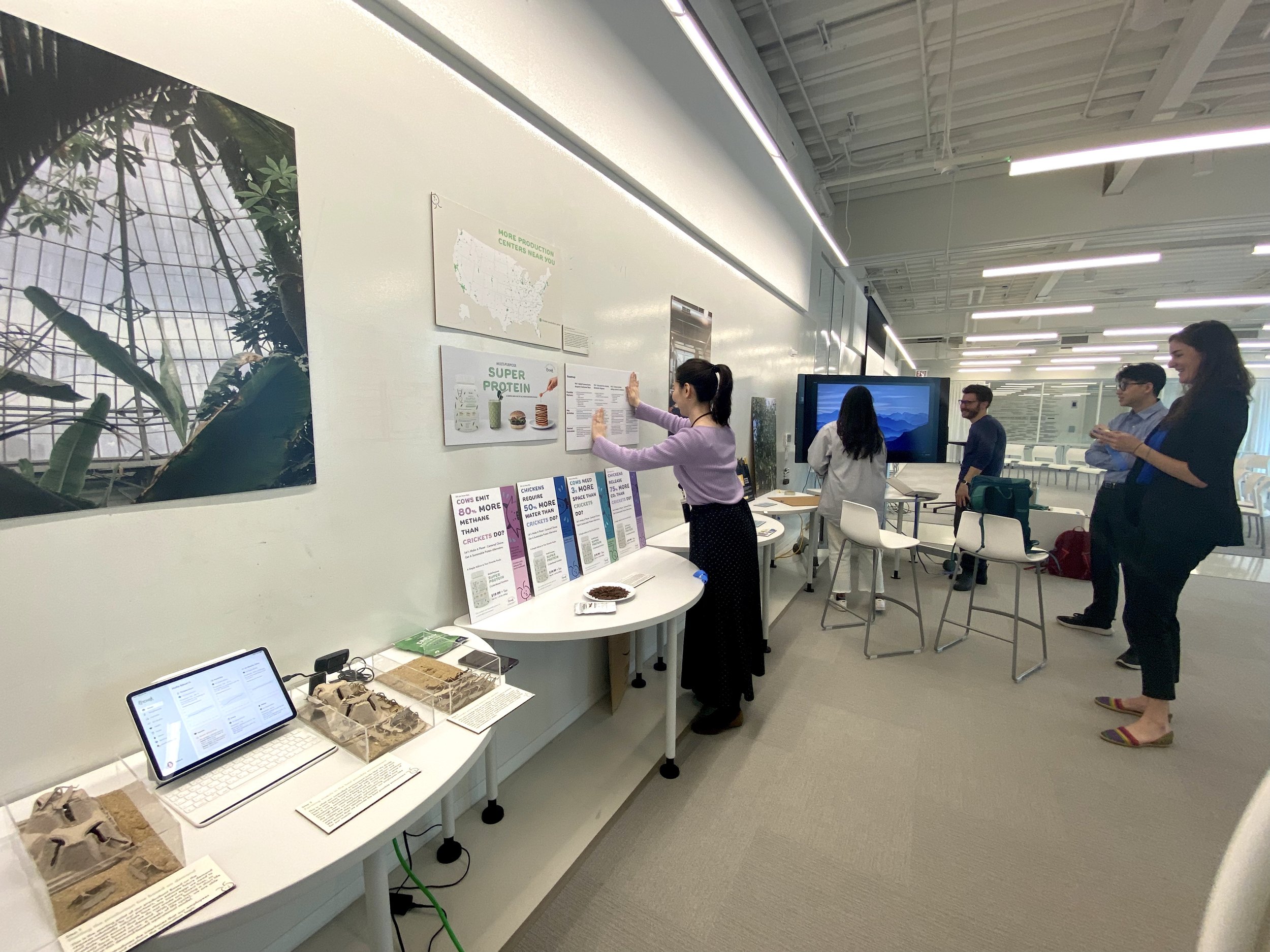
Insect protein infrastructure
Digital platform & CEA ecosystem for farmers


The ImpactSo What?