
The Hidden Intuition of Frontline Work
Ethnographic Research with United’s ORD Airport Agents on Culture, Intuition and Change
Jan - Jun 2025 (6 months)
When thinking of technology improvements for a work group, we often only focus on researching their current interaction flows on their existing tech, but tend to miss the contextual and cultural factors at play. Conducting United’s first corporate ethnographic study of our airport agents gave us much richer insights, not just about their different tool behaviors, but also the larger drivers behind behavior, policy adherence and approach to work.
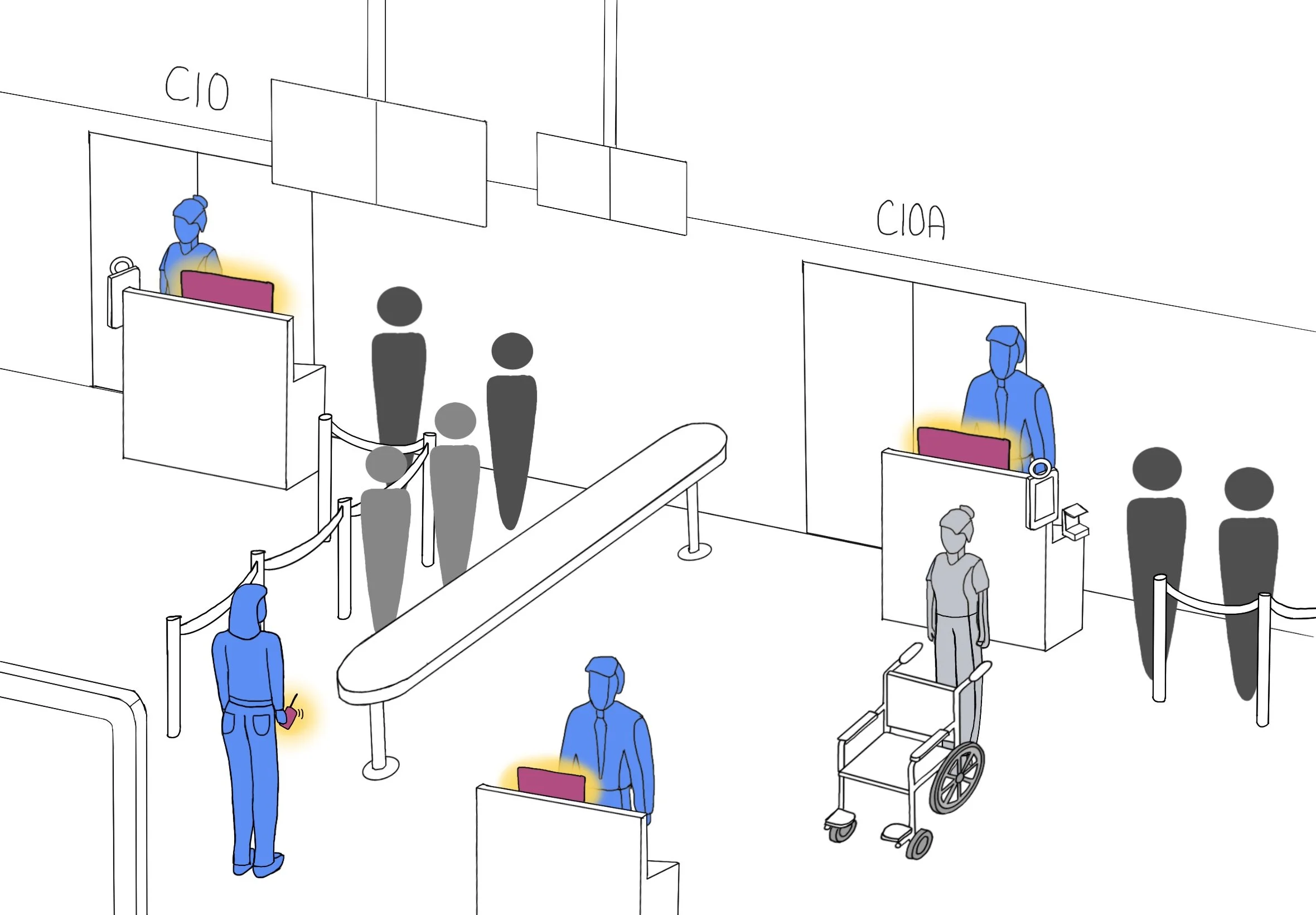
The ChallengeUnderstanding the systemIntroducing any type of change to frontline tools or policies often creates friction and pushback, despite these changes being intended to improve agent workflows. In a 24/7 airport operation, small disruptions compound into major consequences: delays, missed flights and connections, and consequently rising operational costs.
The ArtifactsThe ImpactSo What?We took an ethnographic approach, embedding ourselves into the airport and following the routines of our frontline employees. We built rapport with 40+ individuals across 6 weeks, learning about the intuition they develop through experience, the tactics agents use to deliver great customer service, the relationships they’ve cultivated across the airport, and the values they bring to their roles.
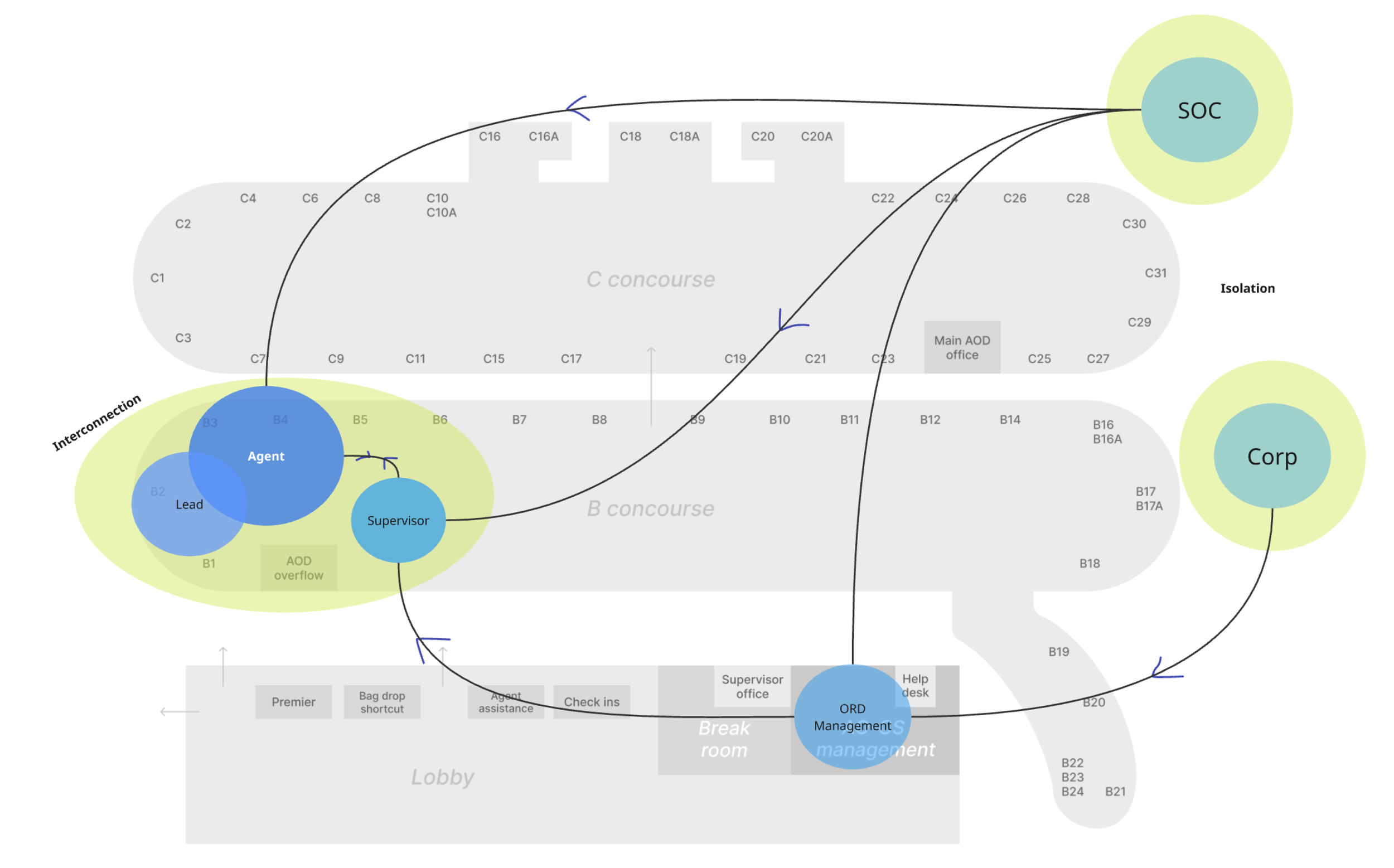
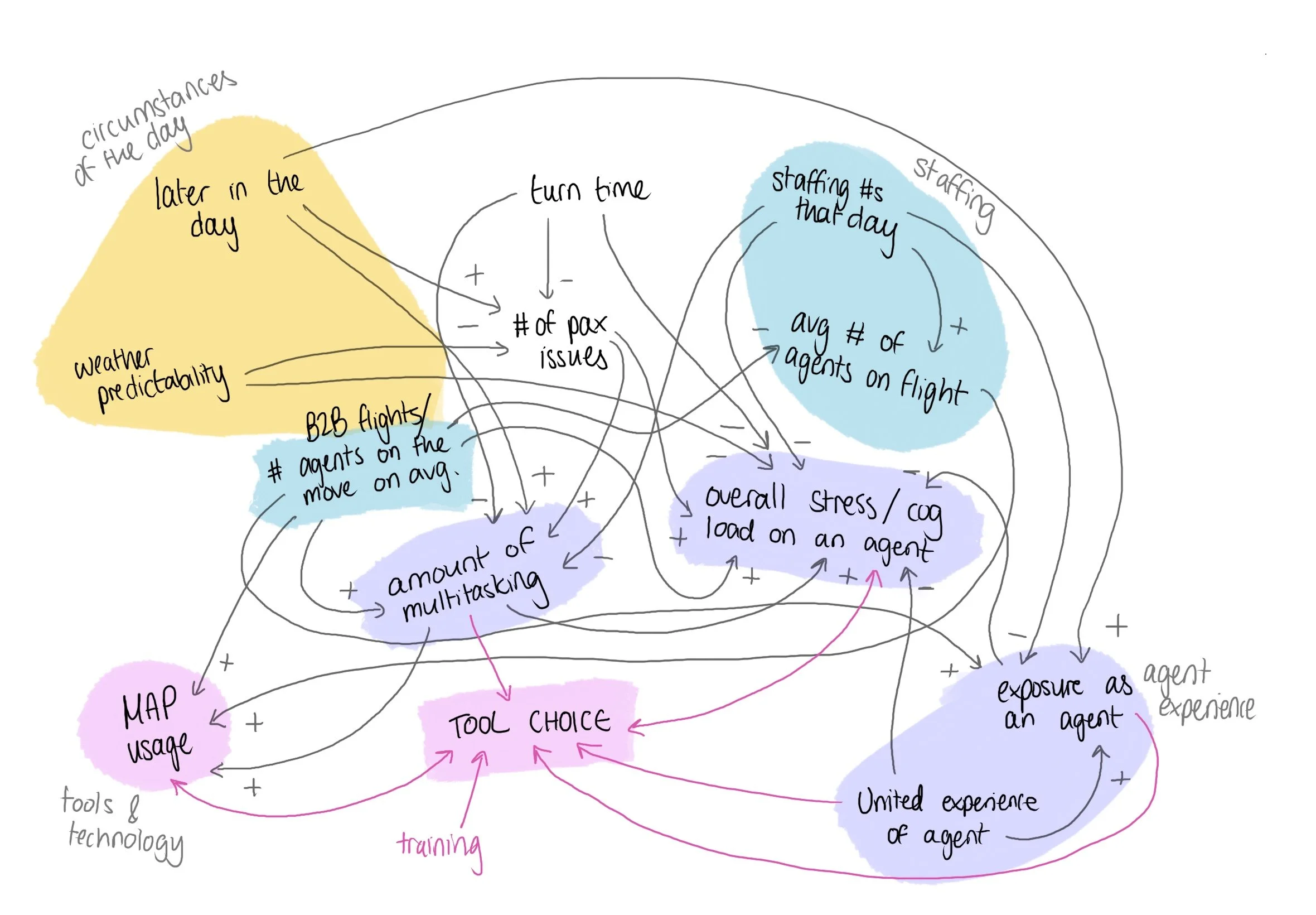
Some of my sketches from the synthesis process
The airport is a dynamic environment with contextual factors changing every minute: passenger flow, delays and weather disruptions, changing flight schedules, technology outages etc. Agent behavior on their tools or in accordance with policy always responds to these factors.
Discrepancies across tools and SOPs were not cases of non-compliance. They were strategic assessments of the real-time airport conditions and deliberate choices to deliver the best customer service possible given those circumstances.
After synthesizing our cultural and ethnographic findings into system-level insights, I designed and built a suite of visual tools for stakeholders to directly engage with our research: three clickable maps, storyboarded vignettes and two ecosystem diagrams. In collaboration with another designer, our team also built a card game for stakeholders to act out frontline decision making processes and experience why agent tools, policies and metrics can sometimes conflict with each other. They got to feel the weight and impact of frontline intuition.
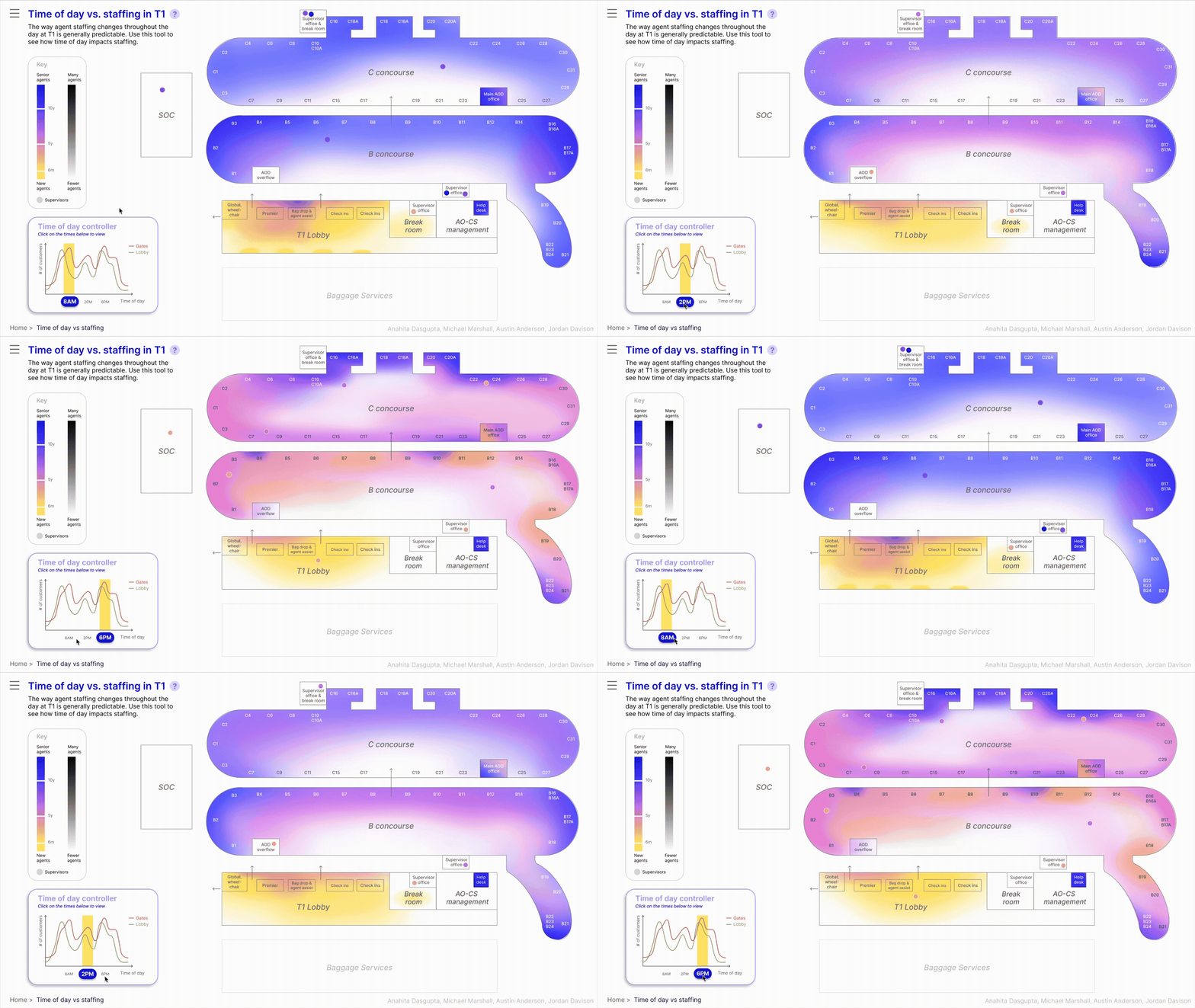
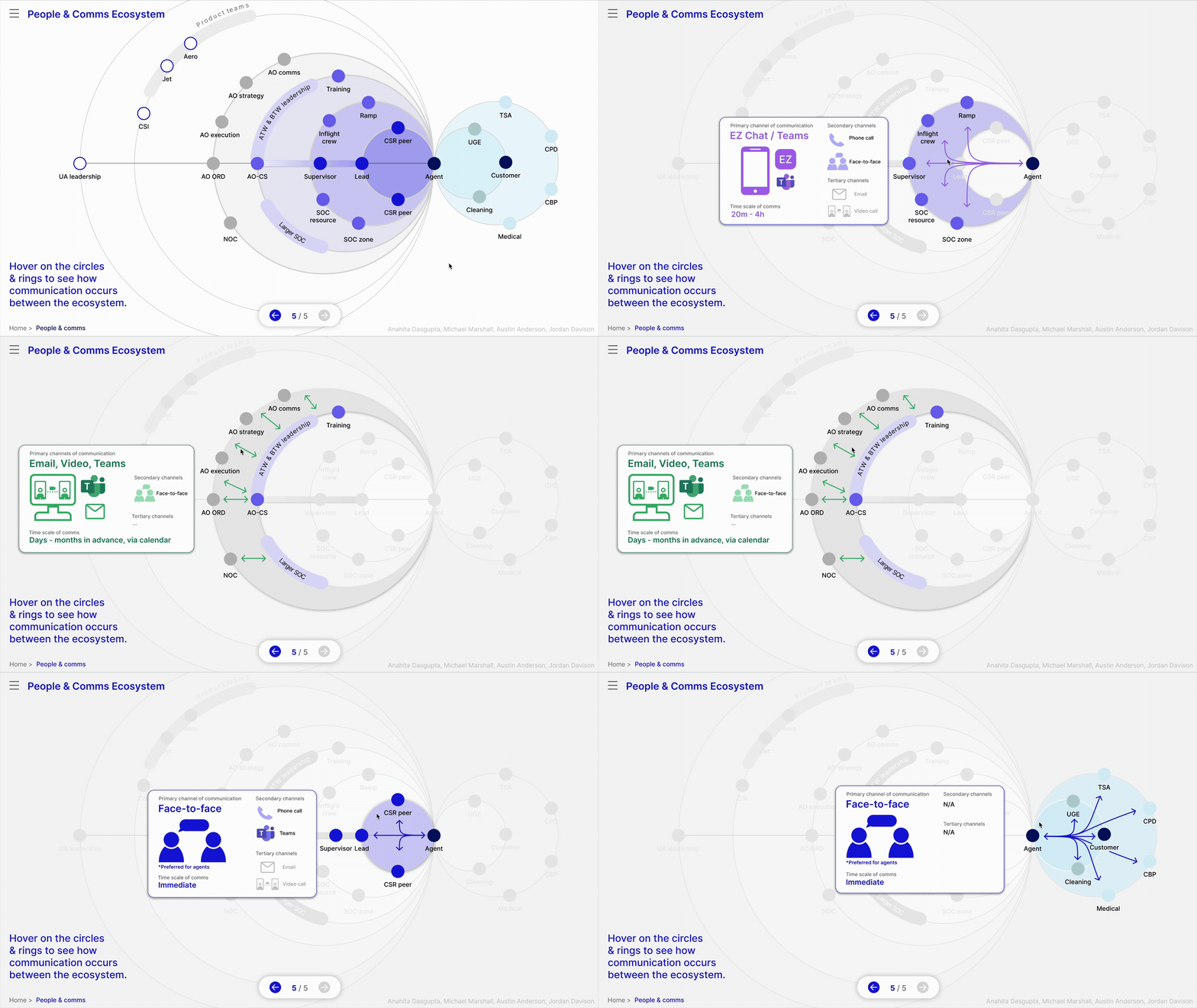
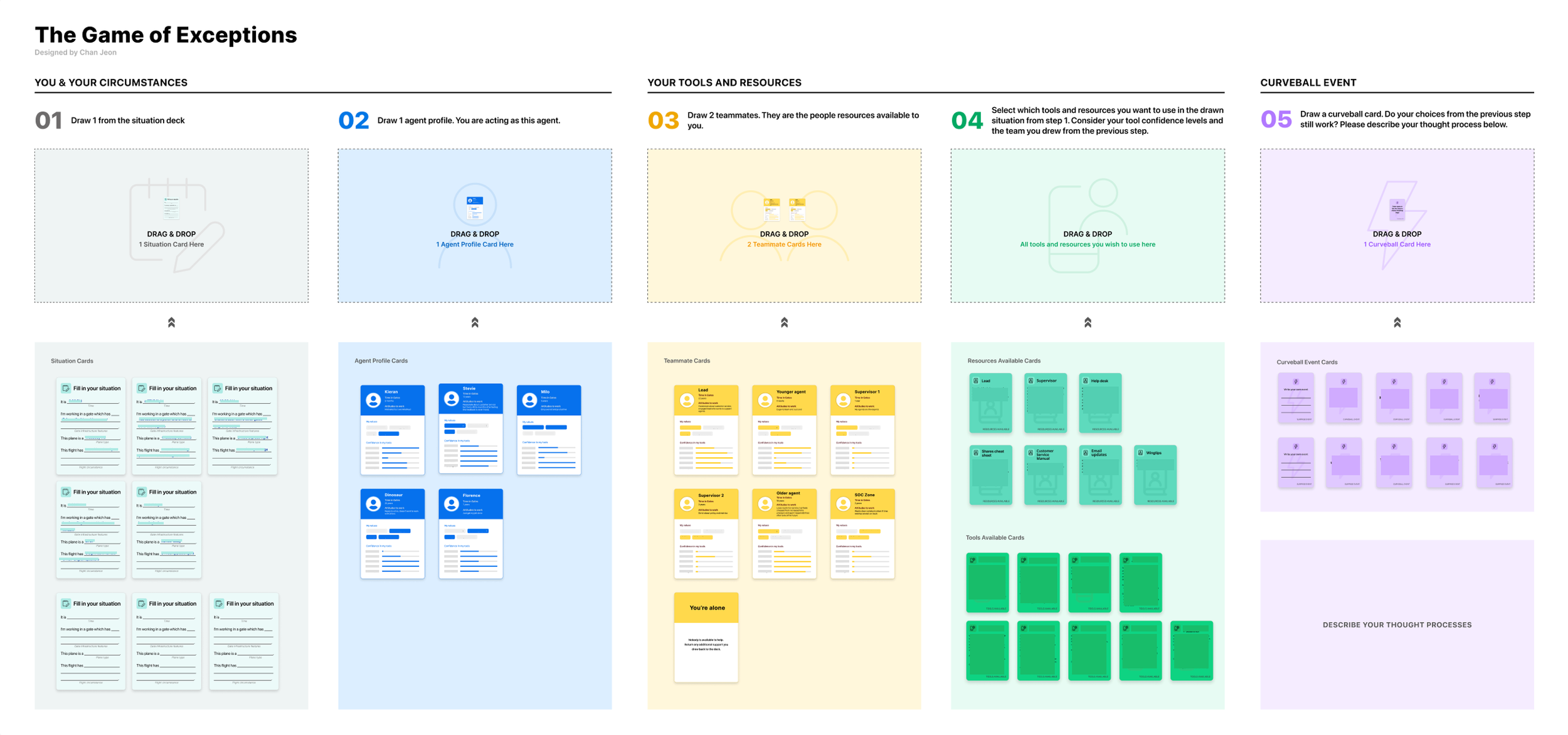
Samples of the interactive tools I built for stakeholders to experience the impact of frontline intuition