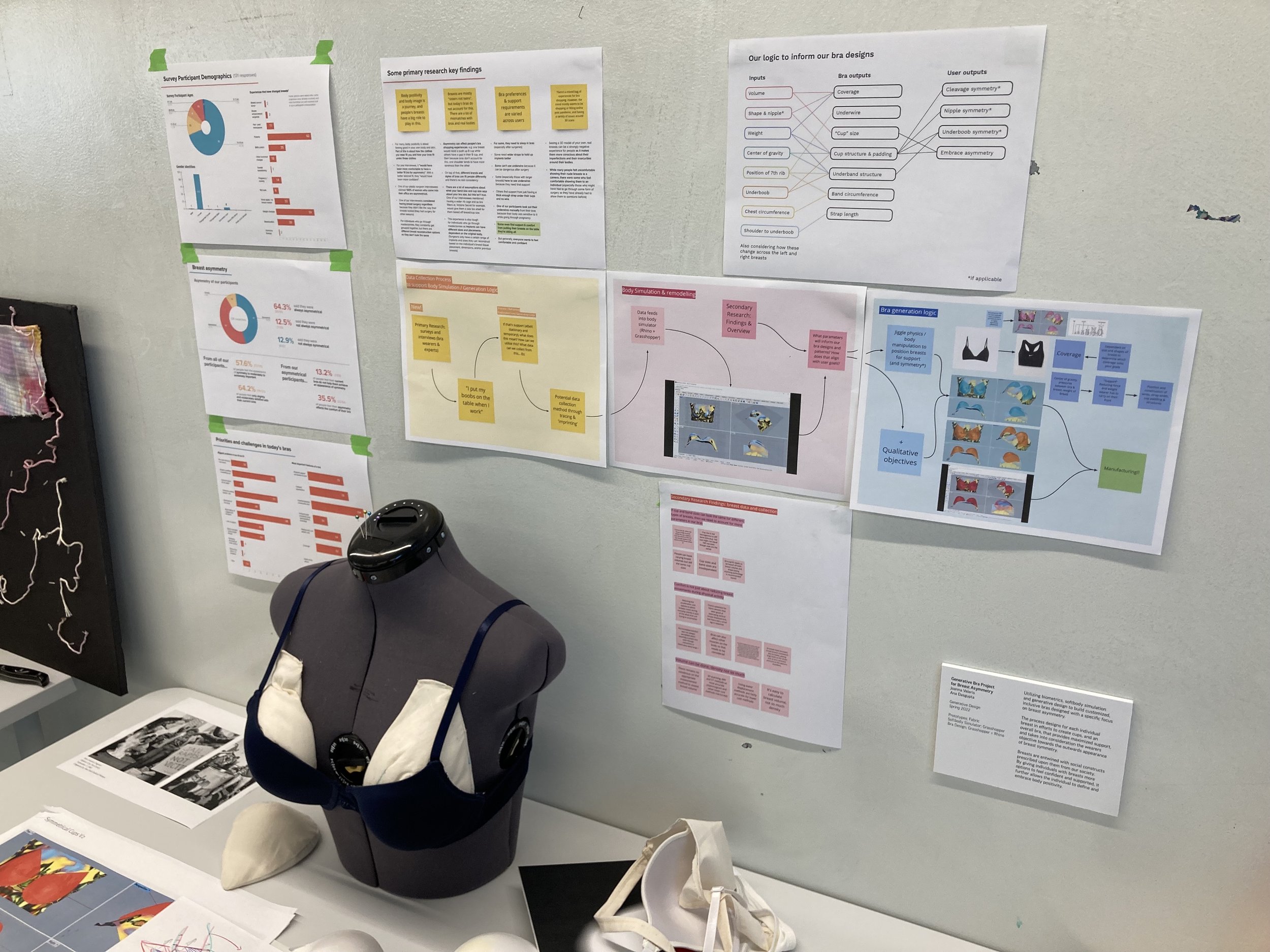
Designing trust into a bra service built on intimate body data
Mar - Oct 2022 (7 months)
Bra sizing has barely changed since the 1800s: standardized sizes for non-standard bodies. Could generative technology finally give women affordable bras that fit our bodies?

Research concepts and prototype shareout
The ChallengeUnderstanding the systemThe ArtifactsThe ImpactSo what?Research and demonstrate how generative data and technology could enable a more precise and personalized bra retail service. Understand the technology requirements and feasibility for a service like this to be affordable and scaleable.
After surveying 100+ bra wearers, conducting 12 in-depth interviews and 5 expert interviews, one thing became clear: this was not just a sizing problem, but also a trust problem.
The market is crowded, but fragmented. No single brand wins broadly; only narrow winners for specific needs. On top of that, a generative service would be working against two layers of mistrust: skepticism built by an industry that has long overpromised on fit, and broader distrust towards tech companies handling intimate and private data.
But the need is there: when it came to buying a brand-new bra service, 100% of our interviewees ranked fit accuracy in their top 3 priorities, while only 11% ranked cost.
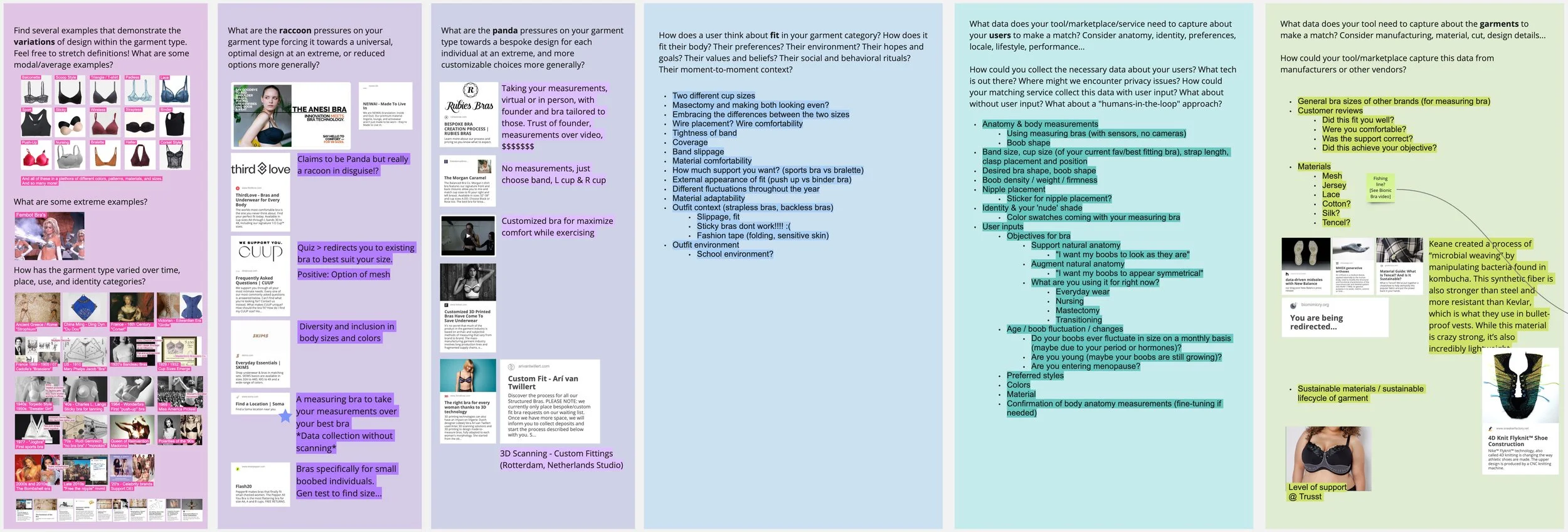
Secondary research workspace snapshot
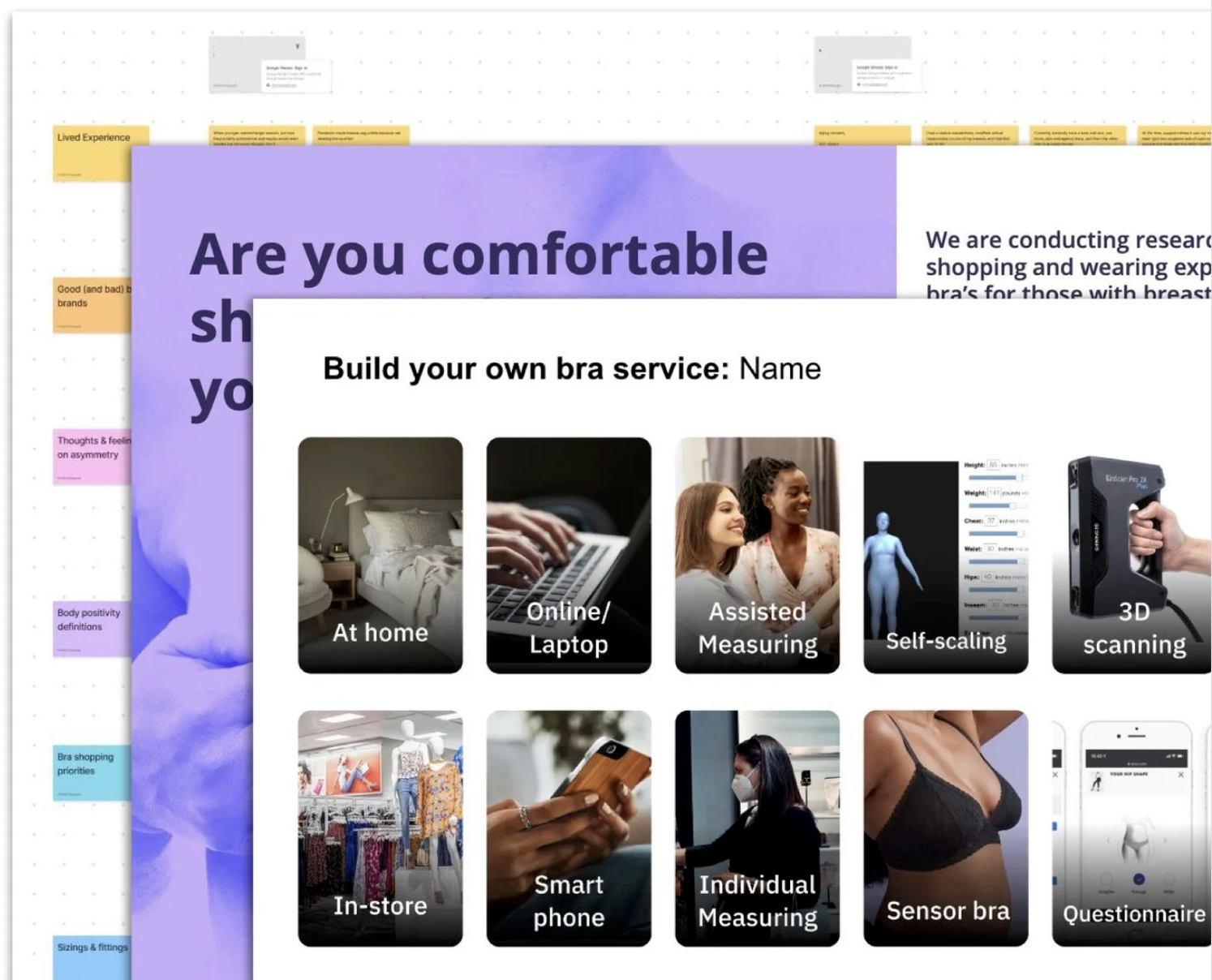
Preview of primary research materials
TrueFit was designed as a service focused on precision (prototyped different data capture methods to reflect real, asymmetrical bodies with varying levels of intimacy to accommodate for varying trust levels) and personalization (letting people inform the algorithmic recommendations based on their own priorities rather than being sorted automatically).

Data-driven generative bra fit modeling back-end

Personalized front-end customer experience
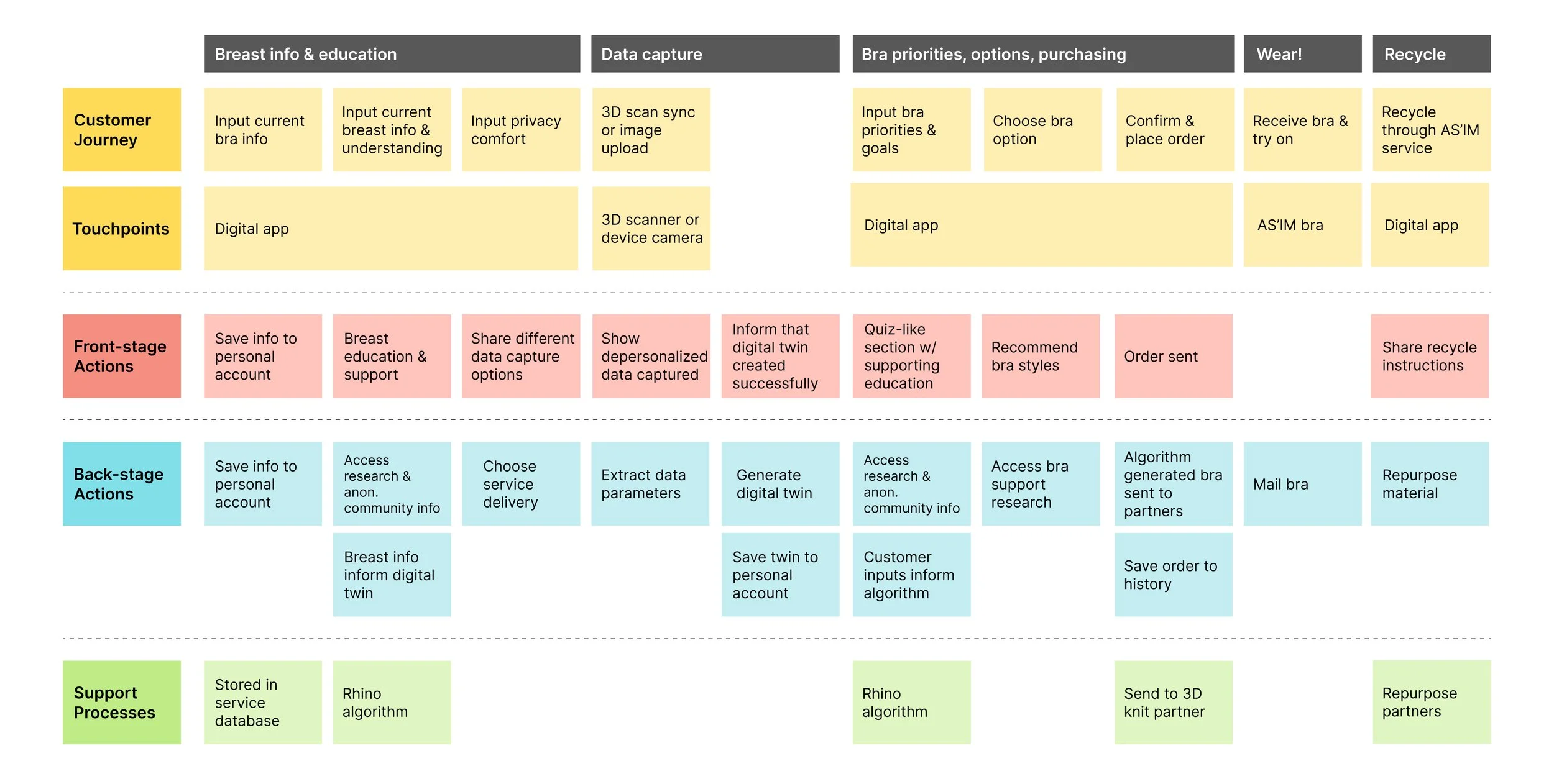
I prototyped the digital service experience and drafted a blueprint for one service delivery flow to make visible all the front and back stage components that had to be in-sync. I built this blueprint in a modular fashion to serve as a framework to build out alternative service delivery flows that could accommodate for the differing data capture methods and personalization preferences.
The interviews and prototypes validated the service direction we were heading in that most bra companies avoid: starting with asymmetrical bodies first rather than treating them as an edge case.
My artifacts helped me see the extent of stakeholders, technologies and processes that would need to be orchestrated to start a service like this. With trust at the forefront of this service, alternative data capture and personalization options would be essential, meaning that orchestration wouldn’t just be required across the single service blueprint but also across the variety of possible service delivery flows.


Sketching throughout synthesis informed my understanding of the complexity involved in this type of service
Standardized sizing has been about practicality and ease of mass manufacturing. But with the emergence of generative technologies, the practicality of personalized manufacturing has become more feasible.
This project challenged the status quo, properly positioning bras into real support garments rather than things for us to fit into. We also asked what it would take for technology to earn trust from women who have lived with this challenge their entire lives.